
EchoBox Benchtop cell engineering

The universal engine for making cell therapies, from lab to clinic.

EchoBox uses sound to gently hold your cells and open them just long enough to let a payload in. Viral delivery in about fifteen minutes today, non-viral on the same instrument next, with the same physics from your bench to clinical scale.

Now running. The first EchoBox unit is live at the University Lab Partners incubator, UC Irvine, with further sites deploying through 2026. We are also running on-site demonstrations across Southern California.

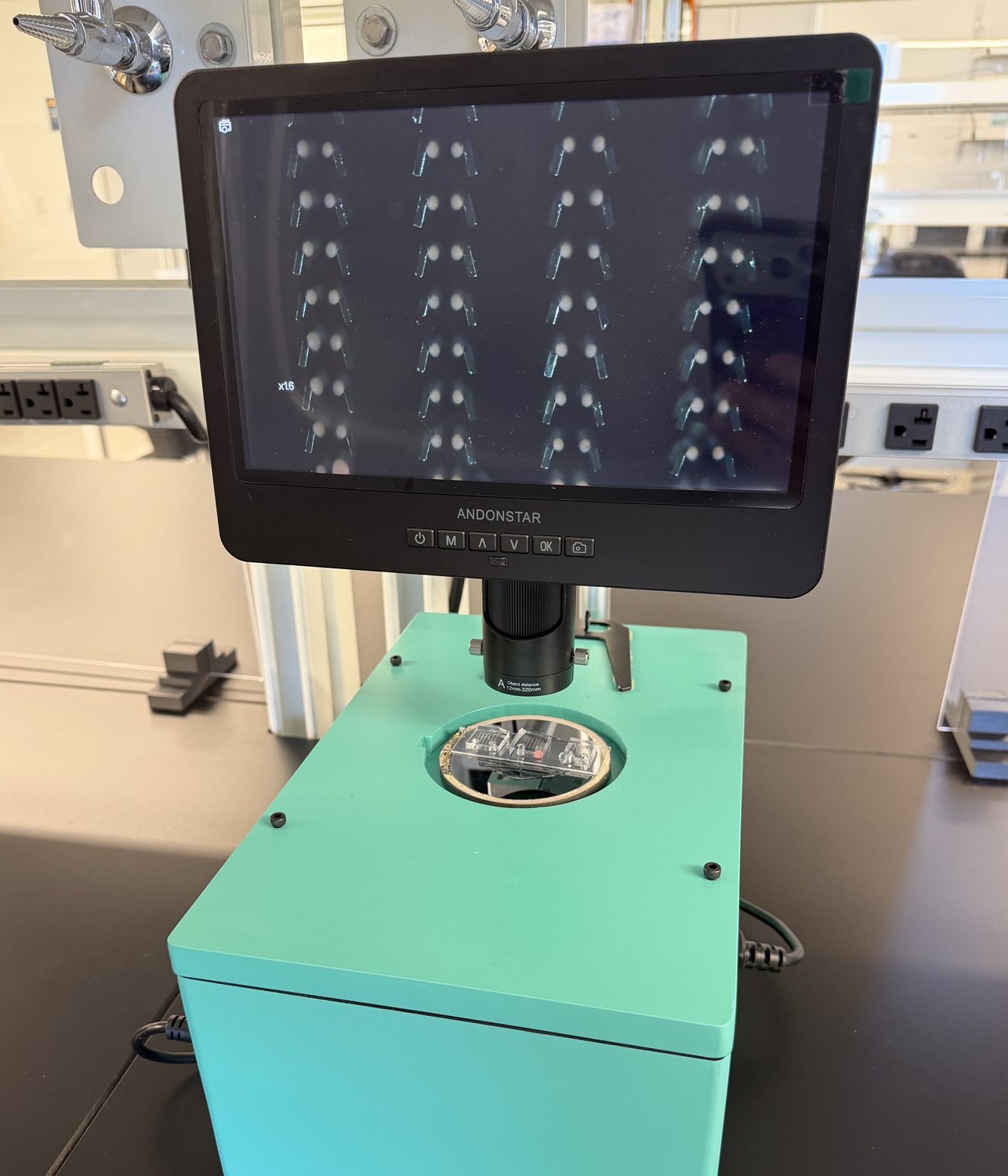
An EchoBox unit on a laboratory bench, with an AESOP chip loaded in the stage and microvortices visible on the monitor above
EchoBox, with an AESOP chip in the stage and the microvortex array live on the monitor.
15 min
On-chip processing, against overnight transduction or multi-hour electroporation workflows
Up to 7×
Higher yield delivering two CRISPR/Cas9 payloads sequentially rather than together
18 variants
Multiplexed T cell variants built in about two hours, from zero to three payloads per cell
~10M cells
Per run on the current manually loaded unit, scaling with vortex count

What it does

One instrument, built for both delivery routes.

EchoBox is an acoustic drive unit, a control interface, and a single-use AESOP chip. You load cells and payload, run the chip, and collect engineered cells ready for culture or assay. Today's configuration runs viral delivery; non-viral delivery is the next release on the same instrument, so choosing EchoBox now does not lock you into one delivery route later.

Viral workflows

Keep the process the FDA already knows

You do not have to abandon viral vectors to cut what they cost you. Fifteen minutes on-chip delivers four times higher transduction efficiency than overnight standard transduction, which means up to four times less vector per run against the same target dose.
Multiplex

Deliver payloads one at a time

Low viability under electroporation forces you to push every payload in at once, and you pay for it in efficiency. EchoBox delivers sequentially instead. Complex multi-edit cell products stop being a gamble.

Viability

Gently porate cells instead of ripping them open

Cells sit in an acoustic vortex while transient pores open and reseal. In internal comparisons that returns roughly four times the yield of viable, transfected cells versus electroporation, with lower inflammatory cytokine secretion (TNFα, IFNγ).

AESOP

Acoustic-Electrical Shear Orbiting Poration

Sound is the part that makes this scale. AESOP applies acoustic energy to a serpentine microfluidic channel to generate standing microvortices at thousands of sites at once. Each vortex holds cells in place while shear forces open transient, controllable pores. The pore is a physical effect rather than a chemical one, which is why the same mechanism carries across cell types and payload classes.

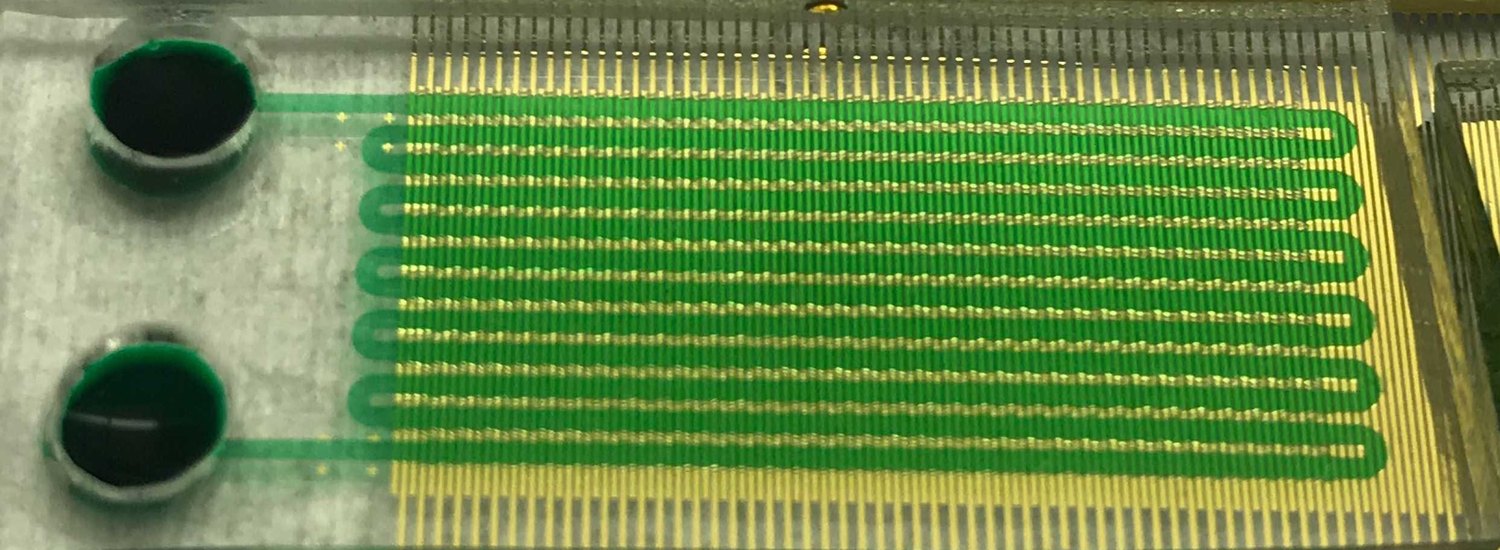
Close view of an AESOP chip showing the serpentine microfluidic channel running between the inlet and outlet ports
A single AESOP chip carrying 1,000 microvortex trapping sites.

More vortices, not a new process.

Throughput comes from vortex count. Whether that means a longer channel or chips run in parallel, the physics at each trapping site is unchanged, so the parameters you optimize on the benchtop are the parameters that govern the process at clinical scale.

You will still run validation work when you scale, because loading more cells always demands it. But you are validating the same mechanism at a larger size rather than re-developing a different process from scratch, and that is where cell therapy programs normally lose years.

01

Load

Pipette cells and payload into the chip. Sample preparation is short and we will walk you through it for your specific workflow.

02

Run

Acoustic energy generates standing microvortices at a thousand sites along the channel. Cells are held in place while shear forces and a mild electric field open transient pores. This is not electroporation: the field is gentle and the cell is supported while it opens, which is why the cells survive it.

03

Collect

Pores reseal, cells recover in the channel, and the engineered population comes off the chip ready for downstream work.

Viral, non-viral, or both. On the same instrument.

In more than a hundred customer interviews through NSF I-Corps, developers told us the same thing: they want to spend far less on viral vector now, and move to non-viral on their own timeline, not a vendor's. AESOP is built for both, so a lab can cut vector cost today and switch delivery modality later without re-validating a new platform.

That is why the viral configuration ships first and non-viral follows on the same instrument.

Roadmap

Where EchoBox is today, and where it is going.

Two lines run in parallel: the benchtop devices, and the chips that unlock new capabilities on them. New capability usually arrives as a new chip rather than a new instrument, so the EchoBox you buy now grows with your program instead of being replaced by it.

Devices

Available now

EchoBox

Benchtop unit for safe, fast viral cell engineering, running about ten million cells per run. Deployed at customer sites and available for on-site demonstration.

Next

EchoBox, non-viral configuration

Adds non-viral delivery of DNA, mRNA, CRISPR reagents, and proteins on the same benchtop instrument, for programs moving off viral vectors or building multi-edit cell products.

In development

EchoBox Whirlpool

On-chip, label-free cell sorting alongside engineering. No bead separation: selection and delivery happen on the same chip.

In development

EchoBox Vortex

GMP clinical-scale on-chip sorting and engineering, for manufacturing partners taking a process into the clinic.

Chips

Available now

R&D Single, viral

Single channel per chip, up to 107 cells per channel.

Next

R&D Single, non-viral

Single channel per chip, up to 107 cells per channel, for non-viral payloads.

Next

R&D HTS

Six to twenty-four channels per chip, 106 cells per channel, for screening and optimization campaigns that need variants in parallel.

In development

R&D Sorter

One leukopak per hour per chip, with label-free sorting on chip.

In development

Clinical Single

One leukopak per hour per chip, yielding 500 million GMP final product cells.

Tell us which stage matters to you.

We prioritize development against what customers actually need next. Say which parts of the roadmap are relevant to your program and we will keep you posted as they land, without a general marketing list.

Keep me updated

Evidence

We will show you the actual experiments.

Every figure on this page comes from our own runs. On a first call we can walk you through non-confidential summaries, including what was measured, which comparator was used, and under what conditions. Full protocols, side-by-side data, and optimization detail follow under a confidentiality agreement.

First unit deployed Running at the University Lab Partners incubator, UC Irvine, with further sites and on-site demonstrations underway.
Partnering Active evaluations with pharmaceutical developers and cell therapy manufacturers.

Team

Built by the people who invented it.

CellEcho is a University of California, Irvine spinout. The acoustofluidics came out of the lab; the commercial team has sold cell therapy tools to the people who will buy this one.

Mohammad Aghaamoo, PhD

Co-founder & CTO

Lead inventor of AESOP and the architect of the chip. Microfluidics engineer whose industry programs span Novartis, Illumina, and Corteva Agriscience. Leads the technical roadmap from the benchtop instrument through clinical-scale chips.

LinkedIn

Andrew Gray, PhD

Chief Executive Officer

Immunologist, trained at the University of Southern California. Two-time biotech founder and CEO before joining CellEcho, and co-inventor of three lipid nanoparticle delivery platforms. Runs commercial strategy, partnerships, and fundraising.

LinkedIn

Glen Prosise, PhD, MBA

Chief Business Officer

Two decades in cell therapy commercial leadership, previously at Miltenyi Biotec, Lonza, and GE. He has sold and supported cell engineering tools to research and manufacturing groups worldwide, and leads sales and customer programs at CellEcho.

LinkedIn

Abraham Lee, PhD

Co-founder & President

Professor of biomedical engineering at UC Irvine and a four-time biotech founder. His laboratory has worked on acoustofluidics and microfluidic cell handling for two decades, and AESOP came out of that work.

LinkedIn

Questions

The things people ask us first.

What exactly do I get with an EchoBox?

An acoustic drive unit and control interface, plus five single-use AESOP chips to get you started. More chips are available to purchase whenever you are ready. The instrument is the durable part; the chip is the consumable you order as you run.

Setup and applications support are included for every customer, not just the first ones.

Does EchoBox go in the biosafety cabinet?

The current unit sits outside the cabinet, on the open bench. The next build is enclosed and designed to be used inside a biosafety cabinet.

Do I have to give up viral vectors?

No, and that is deliberate. Most platforms in this space are non-viral replacements whose architecture physically cannot handle a viral payload, which forces a process change before you are ready for one. AESOP runs viral, non-viral, or both, and the configuration shipping today is the viral one.

We expect that labs will typically start by using it to cut vector cost inside a workflow regulators already understand, then move to non-viral when their own data supports it.

Which cell types does it work with?

The pore is opened by physical forces rather than a cell-specific reagent, so AESOP is designed to be cell-type agnostic across ex vivo cell therapy applications. We have run primary human cells, including T cells.

If we have not yet run your cell type, we will test and optimize it on demand. Tell us what you are working with and we will be straight with you about what we have and have not done before.

What happens when I need to scale up?

You use a chip with more vortices. The trapping physics at each site is unchanged, so your process parameters travel with you rather than being re-derived.

You will still run validation work, because loading more cells always demands it. The difference is that you are validating the same mechanism at a larger size instead of developing a new process, which is what normally sits between preclinical work and pivotal manufacturing.

Do I need microfluidics expertise?

No. The chip is single-use and self-contained, and the run is driven from the control interface. Every customer gets protocol setup and applications support through their first results.

Will you share more data with us?

Yes. We can walk you through non-confidential data summaries on a first call, with no paperwork needed, so you can judge quickly whether the results are relevant to your process.

Full protocols, side-by-side experiments against your current method, and the optimization work behind them are shared once a confidentiality agreement is in place.

Can we see it run before we commit?

Yes. We run on-site demonstrations, currently across Southern California, and we are happy to discuss travelling further for the right program. Ask for a demo through the form below.

We also welcome non-confidential summaries of the data customers generate on the instrument. That feedback is what lets us optimize and improve the system, and it shapes what we build next.

What does it cost?

Instrument and chip pricing depends on configuration and volume, so we quote it directly. Ask for pricing through the form below and our sales team will be in touch.

Contact sales

Tell us what you are engineering.

The fastest way to find out whether EchoBox helps is to tell us your cell type, your payload, and what your current process costs you. We will give you a straight answer, including when the answer is no.

Response time

A member of the team replies within two business days.

Want to see it first?

Choose "Book a demo" below. We are running on-site demonstrations across Southern California.

Already running an EchoBox?

Use the QR code supplied with your unit to reach the feedback forms.

Keep me posted on these parts of the roadmap

We use what you send to reply to you and, if you ask for updates, to tell you when those parts of the roadmap land. Nothing else.